2026-10-13 ·
Handling Storm Surge Water Intrusion Near The Beach
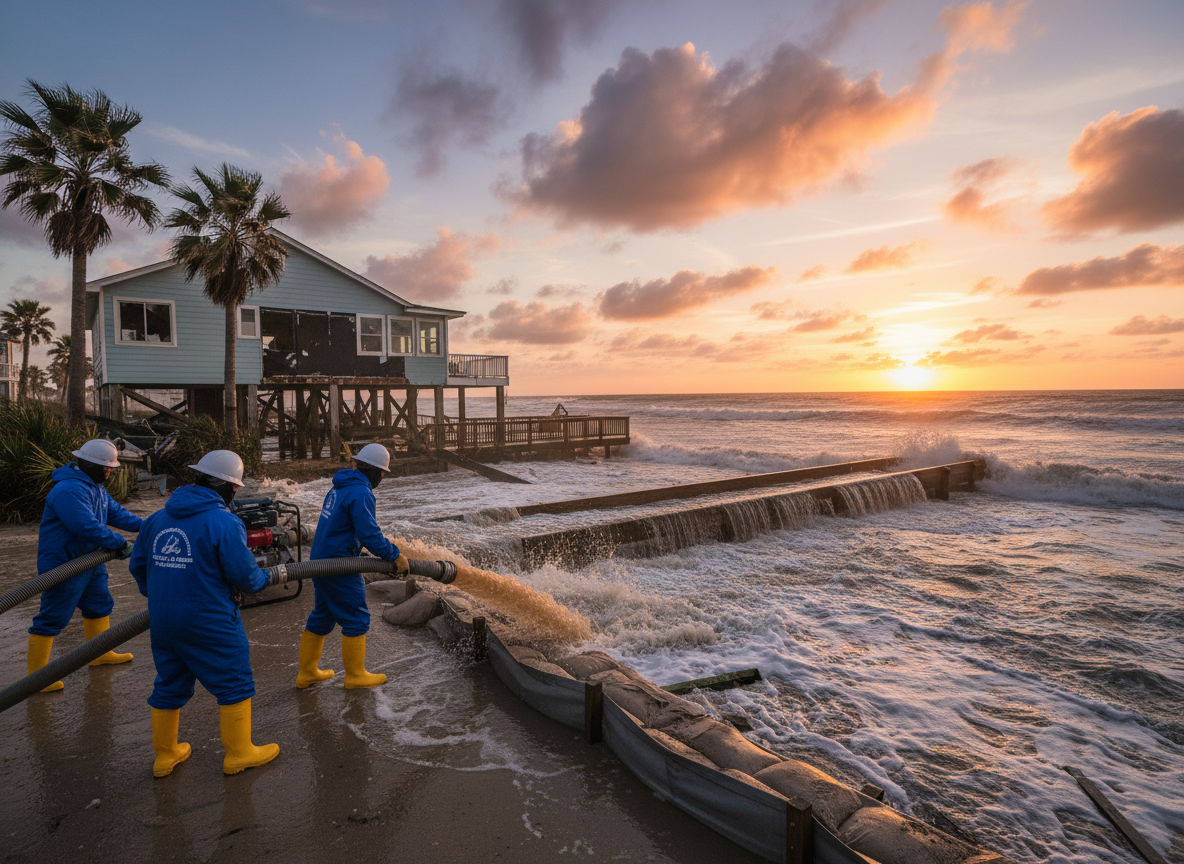
Storm surge water intrusion near Sunset Beach calls for extraction and drying to begin within 24 hours, followed by targeted moisture monitoring over the next 3-5 days to protect wood framing and drywall in coastal homes. Properties along Pacific Coast Hwy face repeated exposure because winter Pacific storms push water inland across low-lying lots, and the area's Mediterranean climate keeps humidity elevated even after the rain stops. Owners in Sunset Beach and nearby Seal Beach often see water reach crawl spaces and slab edges first, where it travels under flooring before visible signs appear.
Assessing Storm Surge Entry Points in Coastal Homes
Homes built before 1980 in Sunset Beach commonly feature raised foundations or partial basements that allow surge water to pool under floor joists. Check exterior grading around the property line first, then inspect door thresholds and window sills facing the beach for gaps larger than 1/4 inch. Interior signs include buckling at baseboards and damp carpet edges within 48 hours of high tide events. In Orange County coastal zones, salt-laden water accelerates corrosion on metal fasteners, so note any white residue on concrete surfaces. Document water lines on walls with photos before removal starts, because insurance adjusters need clear evidence of the intrusion path. Properties closer to Huntington Beach often experience faster saturation in stucco walls because the material holds moisture longer than wood siding.
Emergency Water Removal and Initial Drying
Begin with emergency water removal using truck-mounted pumps rated for 200+ gallons per minute on standing water deeper than 2 inches. Follow with water extraction on saturated carpet pads and subfloors, removing materials within 12-18 inches of the water line to stop wicking. Place commercial air movers at 45-degree angles against walls and run dehumidifiers sized at 30-50 pints per day per 1,000 square feet until relative humidity drops below 50 percent. In Sunset Beach's cool summer evenings, keep equipment running overnight because ambient moisture from the ocean slows natural evaporation. Monitor moisture meters at multiple depths in drywall and wood; readings above 15 percent require continued drying for an additional 48 hours.
Preventing Mold After Coastal Surge Events
Saltwater intrusion raises mold risk in Sunset Beach homes because the mild climate maintains 60-70 percent humidity year-round. After extraction, apply antimicrobial treatments to exposed framing and run HEPA air scrubbers for 72 hours. Homeowners in the area often overlook insulation behind baseboards, where spores settle and later spread into living spaces. Schedule a follow-up inspection 10-14 days later to confirm no hidden growth. Readers can continue learning about this topic in the related guide on Post-Storm Mold Prevention In Humid Coastal Homes. For homes near Seal Beach, focus extra attention on bathroom and laundry areas where plumbing penetrations meet exterior walls.
Long-Term Mitigation for Beachfront Properties
Install French drains along the uphill side of lots in Sunset Beach to redirect future surge flow away from foundations. Replace vulnerable particleboard subfloors with marine-grade plywood rated for repeated wetting. Seal exterior stucco cracks with elastomeric caulk every 3-5 years, especially on south-facing walls exposed to prevailing winds. Owners in Orange County coastal neighborhoods also benefit from elevating electrical outlets and HVAC returns above expected surge heights. When planning repairs, review the guide on Inspecting Older Plumbing After Heavy Rainfall for additional checks on supply lines that may have been stressed during the event. These steps reduce repeat calls for water damage mitigation after subsequent storms.