2026-10-13 ·
Inspecting Older Plumbing After Heavy Rainfall
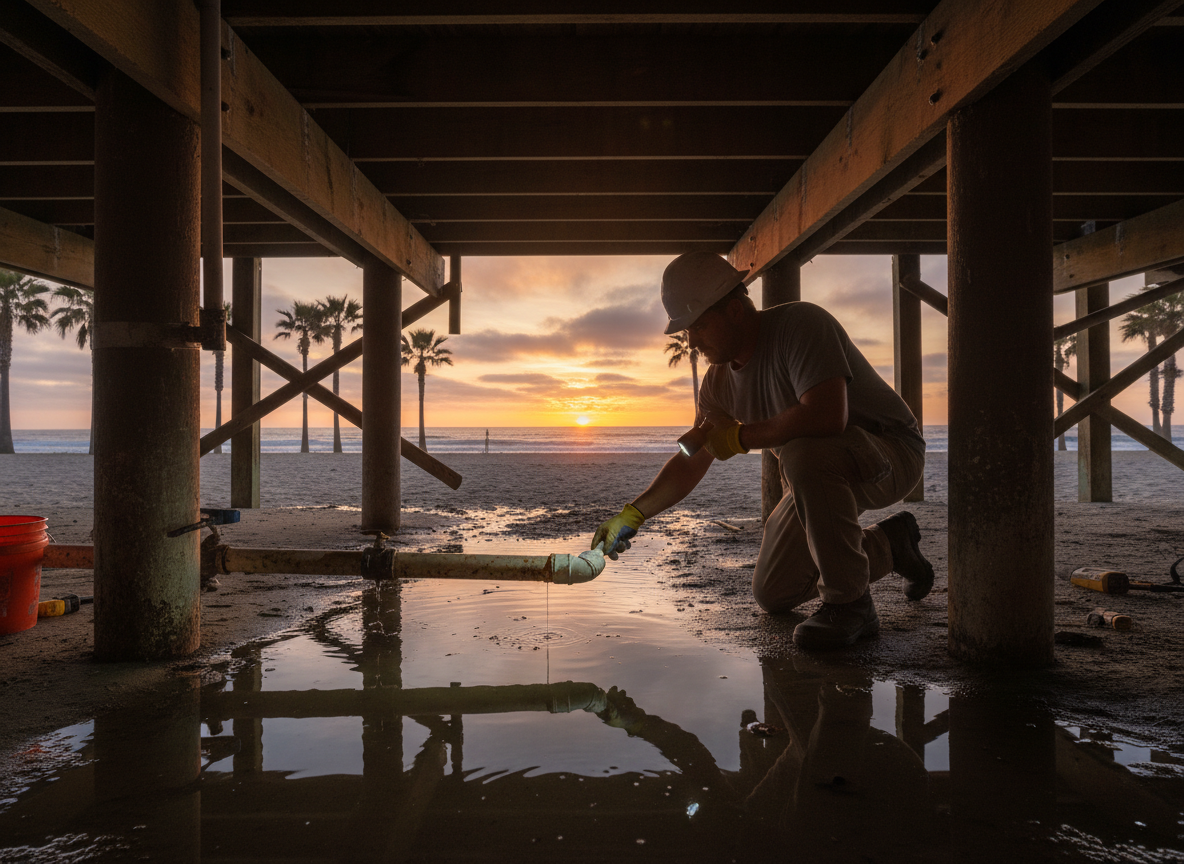
After heavy rainfall in Sunset Beach, begin inspecting older plumbing within 24 to 48 hours by checking exposed pipes under sinks, in crawl spaces, and near water heaters for new drips or corrosion. Sunset Beach homes built before the 1970s often feature galvanized steel or cast iron lines that corrode faster when coastal moisture combines with sudden downpours. The mild Mediterranean climate keeps summers cool but allows winter storms to deliver concentrated rain that saturates soil and raises groundwater levels around foundations. This saturation pushes water against pipe joints and can force small cracks to leak where older materials have already thinned. Checking during daylight right after the rain stops reveals active seepage before drywall or flooring hides the evidence.
How Local Soil and Terrain Influence Pipe Performance
Sunset Beach sits on sandy, low-lying ground near the Pacific that shifts slightly during heavy rain events common in Orange County winters. Older homes along Pacific Coast Highway and adjacent streets often rest on shallow foundations where soil expansion presses against buried supply lines and drain pipes. The cool summer temperatures limit natural drying, so moisture lingers longer around joints compared to inland neighborhoods. Residents in nearby Seal Beach and Huntington Beach report similar patterns where clay pockets beneath the sand trap water against older plumbing runs. These conditions mean inspectors should focus first on the transition points where pipes enter the home and where they connect to exterior hose bibs, as these areas absorb the most ground movement after storms.
Visible and Hidden Signs to Document During Inspection
Look for brown water stains on ceilings or walls near bathrooms and kitchens, which often trace back to roof or vent pipe penetrations loosened by wind-driven rain. In crawl spaces, shine a light along the length of galvanized lines for white or orange crust indicating slow leaks that only appear after soil saturation. Check toilet bases and shower pans for new gaps in caulk that allow water to reach subfloors during prolonged rain. Document any musty odors near baseboards, as these frequently signal water that has wicked into older hardwood or particleboard. Note the age of visible shutoff valves; many pre-1980 valves in Sunset Beach homes seize or drip after pressure changes from storm runoff. Photograph every finding with a timestamp so restoration crews can prioritize areas that received the most direct rainfall exposure.
Practical Steps for a Thorough Post-Rain Check
Turn off the main water supply at the meter for ten minutes and watch the dial for movement that reveals hidden leaks under slabs or in walls. Run each fixture for two minutes while listening for unusual gurgling in drains, which can indicate partial blockages from debris washed into lines during heavy flow. Remove access panels on water heaters and examine the temperature-pressure relief valve and supply connections for fresh corrosion. Test exterior hose bibs by running water then shutting off quickly to check for backflow into the foundation area. Record the location of any cleanouts and note whether they sit below grade where storm water can enter the system. These steps take roughly 45 minutes per home and provide a clear record before calling for water leak restoration if issues appear.
When Professional Assessment Becomes Necessary
If inspection reveals active dripping, widespread staining, or any sign of water reaching electrical boxes, stop further checks and contact a restoration team immediately. Sunset Beach properties near the beach face added risk from salt air accelerating metal corrosion, so older plumbing often requires specialized drying equipment after even modest leaks. Professional crews can use moisture meters to trace water behind tile or under vinyl without demolition. They also coordinate with water damage mitigation steps that protect neighboring homes in tight beach lots. For homes showing repeated issues after multiple storms, review the related guide on post-storm mold prevention in humid coastal homes to understand long-term humidity control. Prompt action limits damage spread and keeps restoration focused on the affected plumbing sections rather than entire rooms.